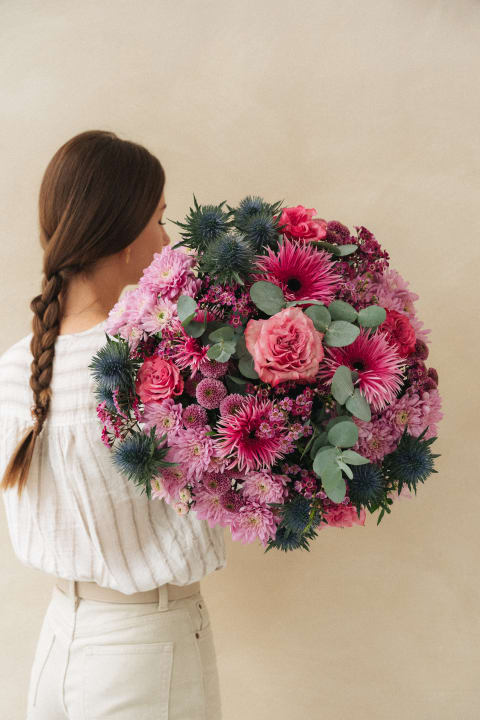
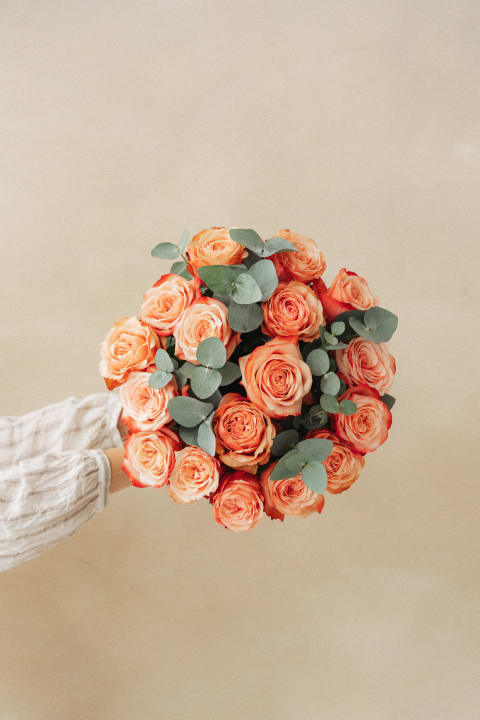
Flowers are one of the most natural gifts you can give in Switzerland, for a dinner invitation, a thank-you, a new neighbour or a colleague’s farewell. The basics are simple: be on time, pick a medium-sized bouquet in mixed or seasonal colours, keep red roses for romance and formal all-white arrangements for mourning. Everything else is a matter of local habit, and those vary more than you might expect across a country with four languages.
A caveat before the details: there is no single “Swiss etiquette”. Habits differ between Geneva and St Gallen, between a farmhouse and a city flat, between generations. Treat what follows as friendly guidance, and when you are unsure, ask a local friend or colleague. People are generally happy to explain.
Invited to dinner
If you are invited to someone’s home, a small gift for the hosts is a nice gesture almost everywhere in Switzerland. Flowers, a bottle of wine or a box of chocolates are the usual choices, and flowers have the advantage of suiting every household, including those who do not drink.
Some practical thoughts:
- Size. Medium is right. An enormous bouquet can feel like too much for a casual supper and creates a vase problem.
- Ready to display. The host is cooking, greeting, taking coats. A bouquet that already stands in its own water saves them a hunt for a vase. KANEL bouquets arrive in a box with the stems in a water reservoir, which helps.
- Send instead of carry. A lovely alternative is to have flowers delivered on the day of the dinner, or the next day as a thank-you. They arrive when the host has time to enjoy them.
Punctuality
Arriving at the time you were invited is the safe default. If you are running late, a short message to the host is appreciated. Arriving early is not much better than arriving very late: hosts are often still getting ready.
Wrapping
You may hear that in German-speaking Europe flowers should be unwrapped before you hand them over. Customs differ from one household to the next, and most people are simply pleased to receive flowers, wrapped or not. If you are carrying a bouquet in paper, it is a graceful gesture to offer to put it in water yourself.
Colours and what they can suggest
Colours carry gentle associations in much of Europe, and Switzerland is no exception. None of these are rules, but they are worth knowing:
| Colour or style | Usually reads as | Good for |
|---|---|---|
| Deep red, especially red roses | Romance | A partner; anniversaries; Valentine’s Day |
| Soft pink, peach, cream | Tenderness, gratitude | Mothers, friends, thank-yous, new babies |
| Yellow and orange | Cheer, energy | Birthdays, get-well wishes, colleagues |
| Mixed seasonal colours | Warmth, no hidden message | Hosts, neighbours, almost anyone |
| Formal all-white arrangements (wreaths, sprays, hearts) | Mourning | Funerals and sympathy |
| White in a light, airy bouquet | Elegance, freshness | Weddings, births, minimalist homes |
The only real trap for a newcomer is sending something that looks like it belongs at a funeral. In parts of Europe, certain flowers and formal white arrangements are strongly associated with cemeteries and All Saints’ Day. Because KANEL changes its bouquets every week, we will not name varieties here, but the principle is simple: for a happy occasion, choose a bouquet with colour or a soft mix, not a structured all-white piece.
Red roses deserve their own line: they say “I love you” quite clearly. For a host, a colleague or your partner’s mother, choose another colour, and keep the rose bouquets for someone who will read the message the right way.
Odd or even numbers
In some parts of Central and Eastern Europe, an even number of flowers is linked with mourning, and you may come across the idea that bouquets should have an odd number of stems. Some people in Switzerland know the custom, many do not, and with a mixed hand-tied bouquet nobody counts. If you are giving a small bunch of a single kind of flower to someone with roots in that tradition, choosing an odd number costs nothing.
Other occasions
Thank-you flowers. After a dinner, a weekend stay or a favour, flowers sent a day or two later are a warm way to say thanks, and they stretch the gesture beyond the evening itself. Our thank-you page has card ideas.
New neighbours. Introducing yourself with a small bouquet, or welcoming someone who has just moved in, is a friendly gesture, especially in a shared apartment building. If they have just arrived, their name may not be on the bell yet; see the name on the letterbox.
Colleagues. For a promotion, farewell or birthday, flowers delivered to the office are common and welcome. Keep the card professional. Our office delivery guide covers addresses and timing.
Hospital visits. Check whether the ward accepts flowers before you order or bring them; some units do not, for hygiene reasons. See hospitals and clinics.
Mother’s Day. It is celebrated on a Sunday, and KANEL does not deliver on Sundays, so plan for the day before. Our Mother’s Day page has the details.
Sympathy. Funerals have their own customs, from timing to ribbons. Our guide to sympathy flowers and funerals explains them.
Regional differences, honestly
Switzerland’s language regions do have different rhythms. Greetings, the time dinner starts, how formal people are on a first visit, how many kisses on the cheek: all of these vary between French-, German- and Italian-speaking areas, and between town and country. Flower habits vary less than greetings do. A medium, colourful bouquet is welcome everywhere.
A short checklist
- Medium size, mixed or seasonal colours.
- No red roses unless it is romantic.
- No formal all-white arrangements for happy occasions.
- Already in water, or delivered separately.
- On time, with a short message if you are late.
For a host gift that fits any home, our seasonal bouquets start at CHF 74.90 and change with the weeks; the timeless collection starts at CHF 64.90. A message card is free from CHF 55, and code KANEL5 gives 5 % off.